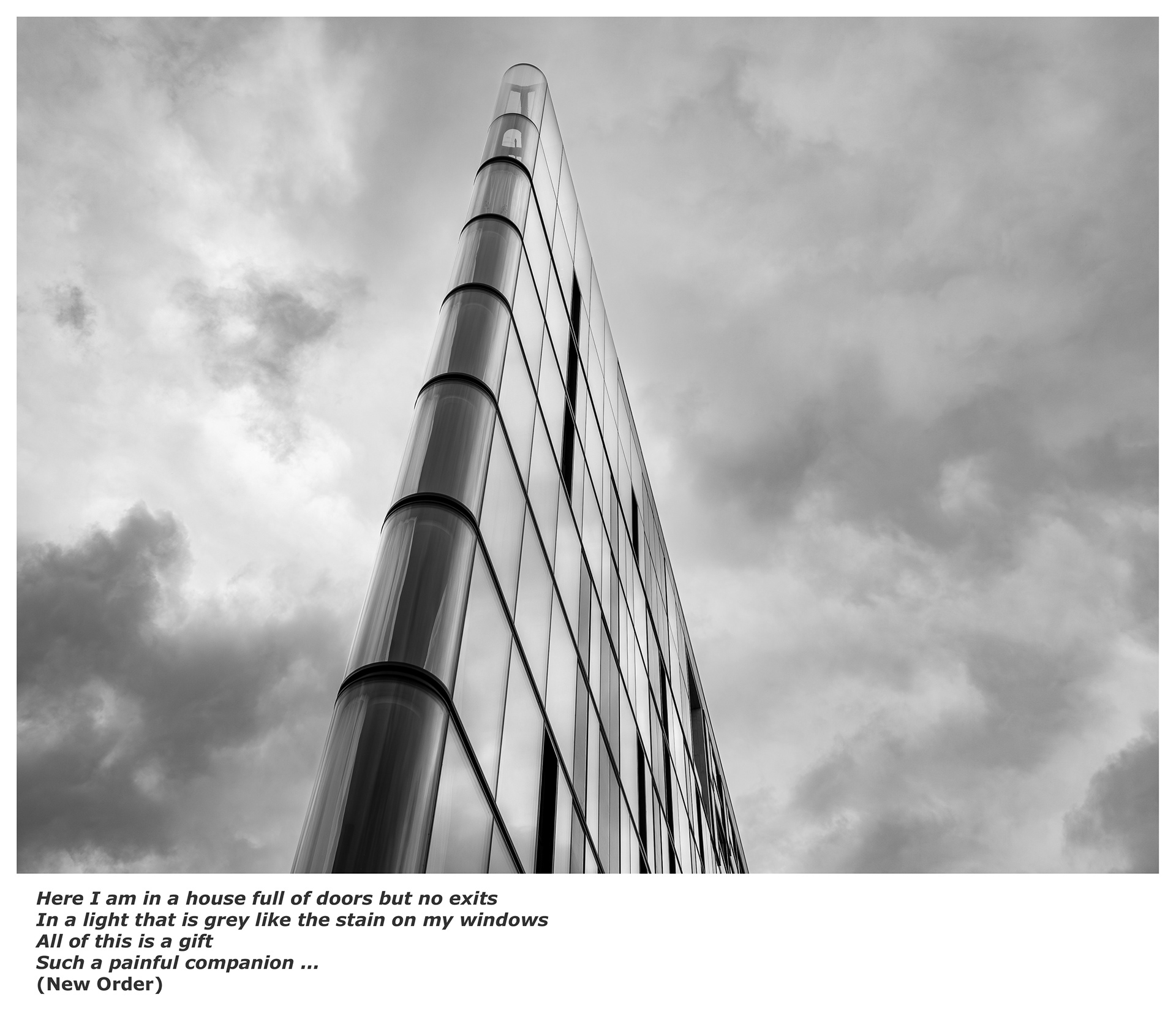
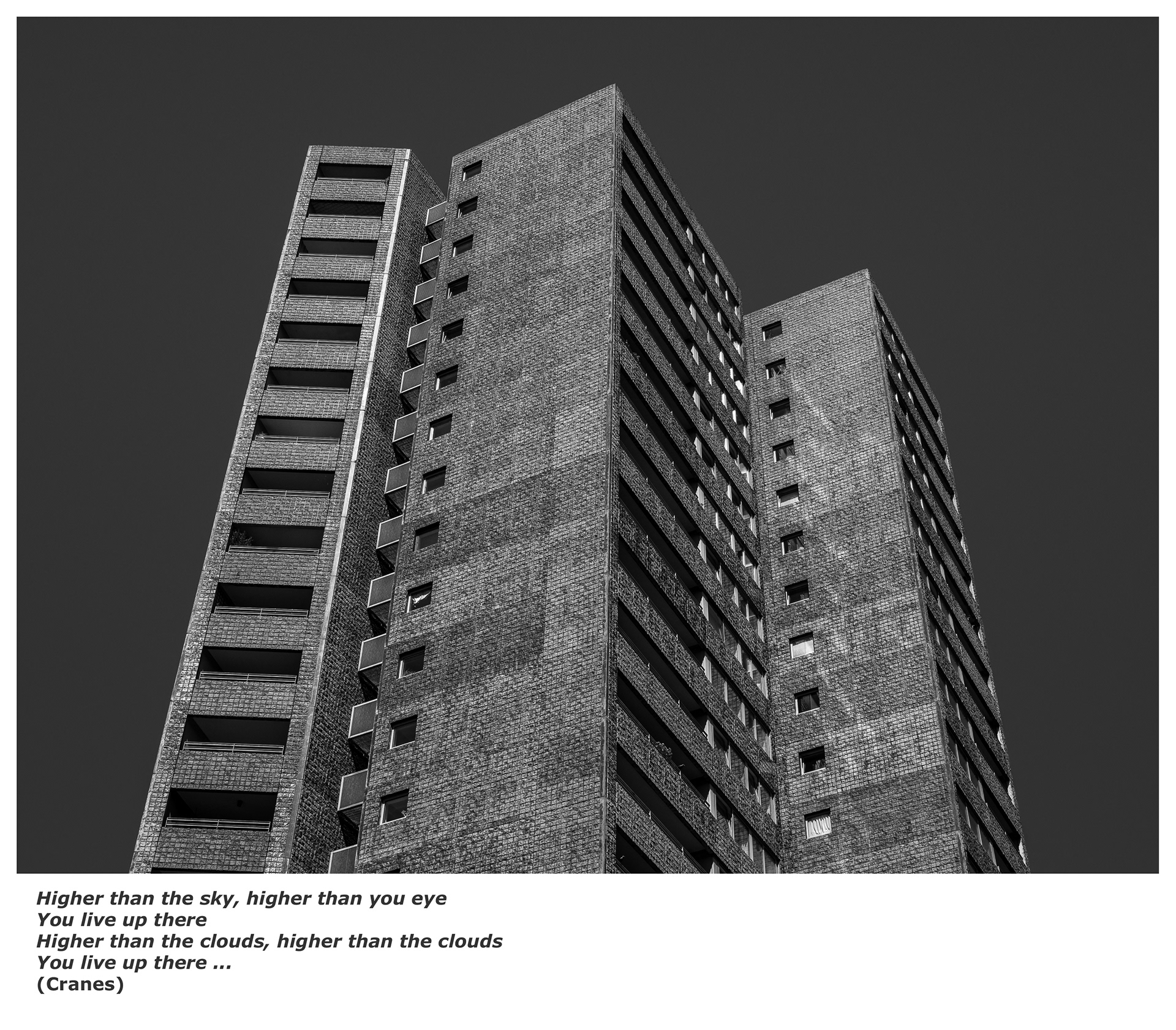
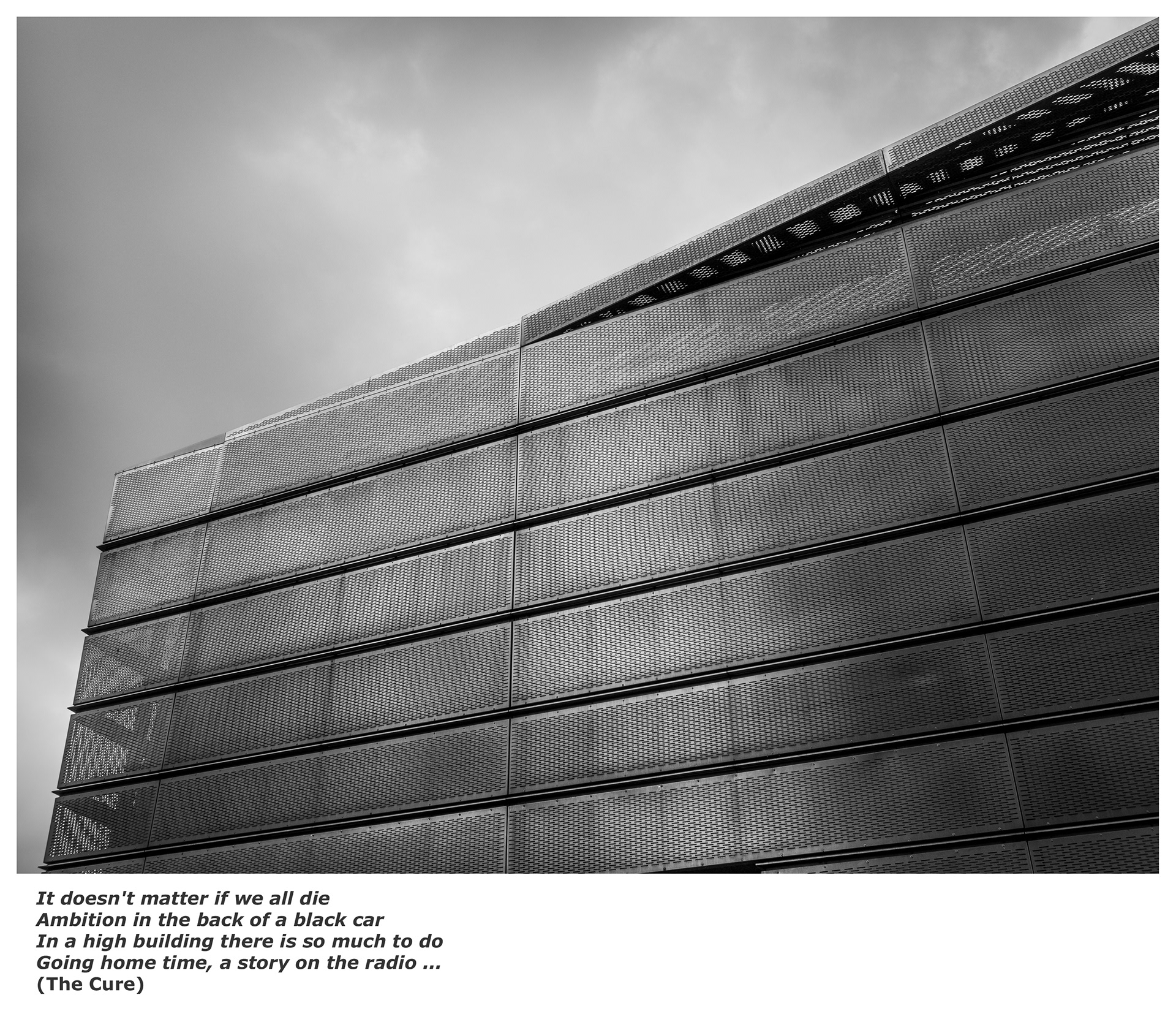
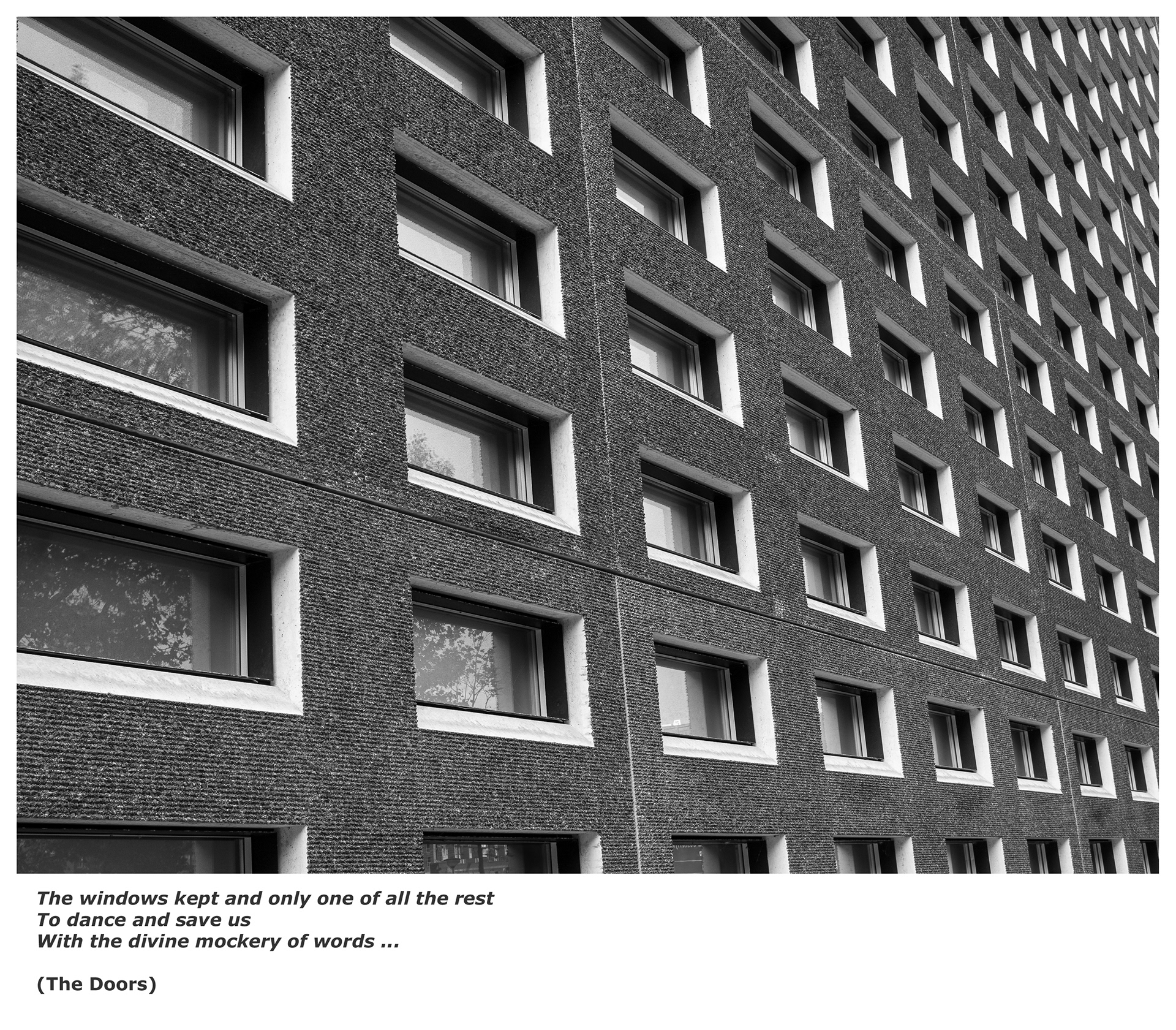
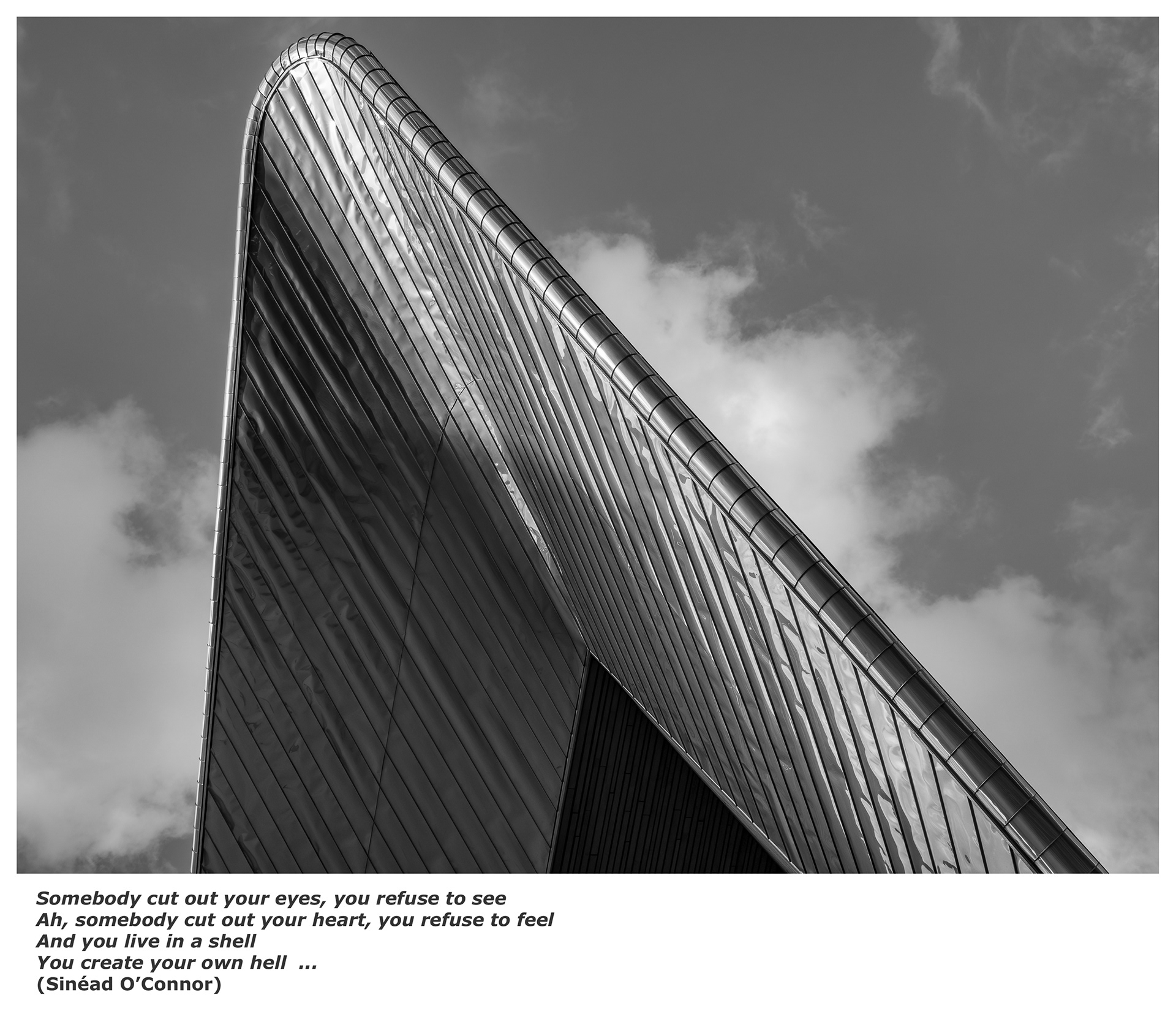
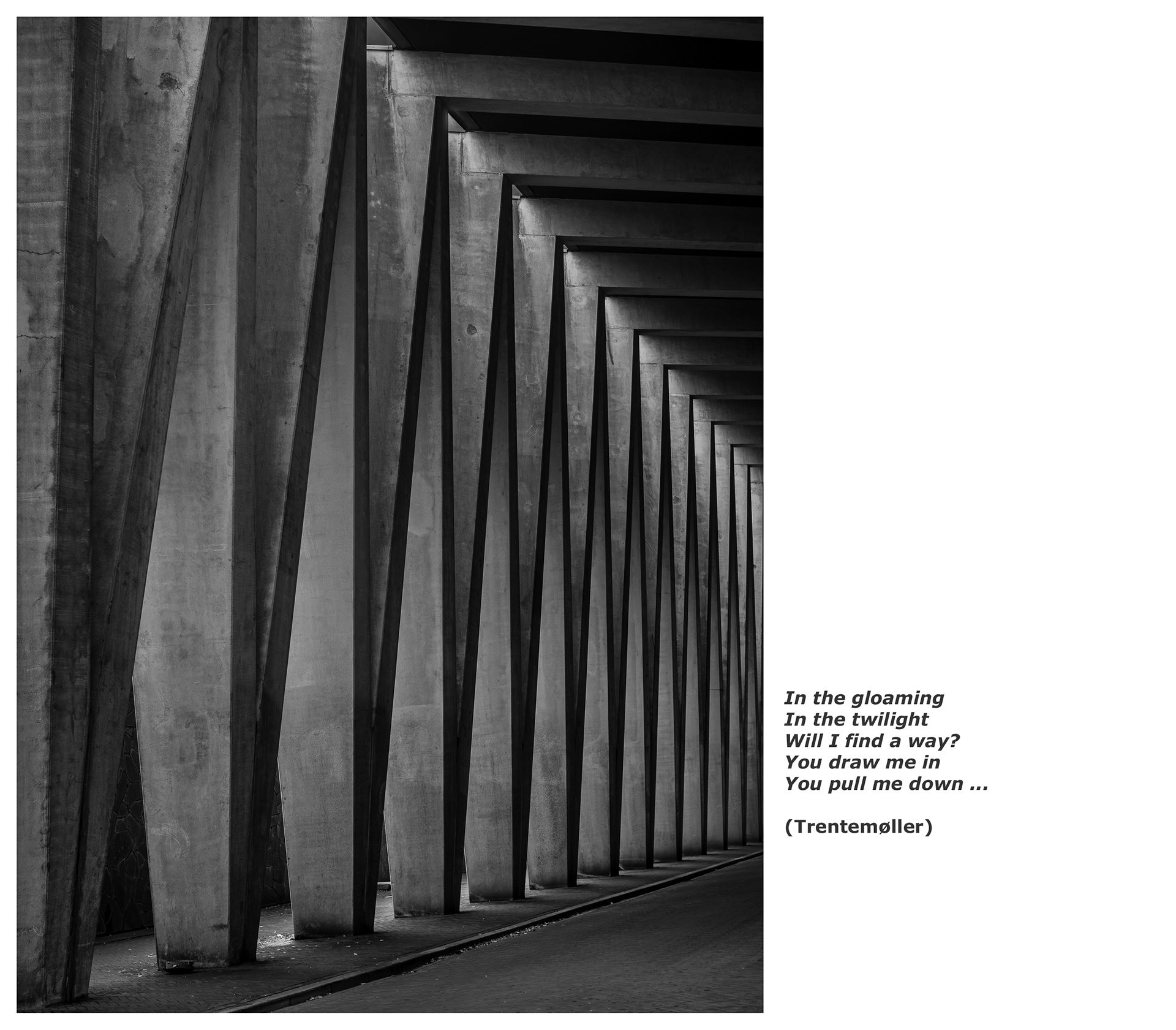
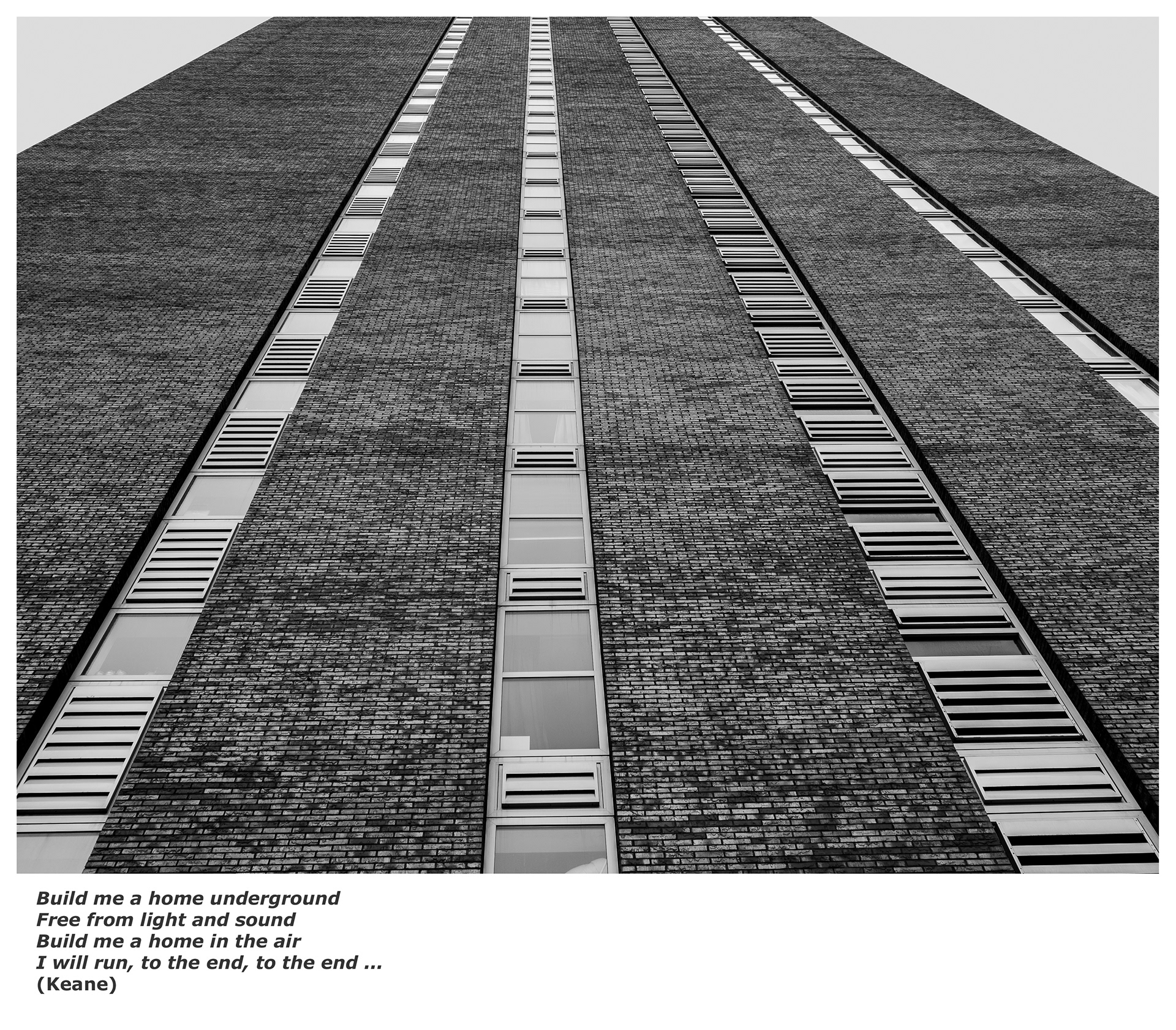
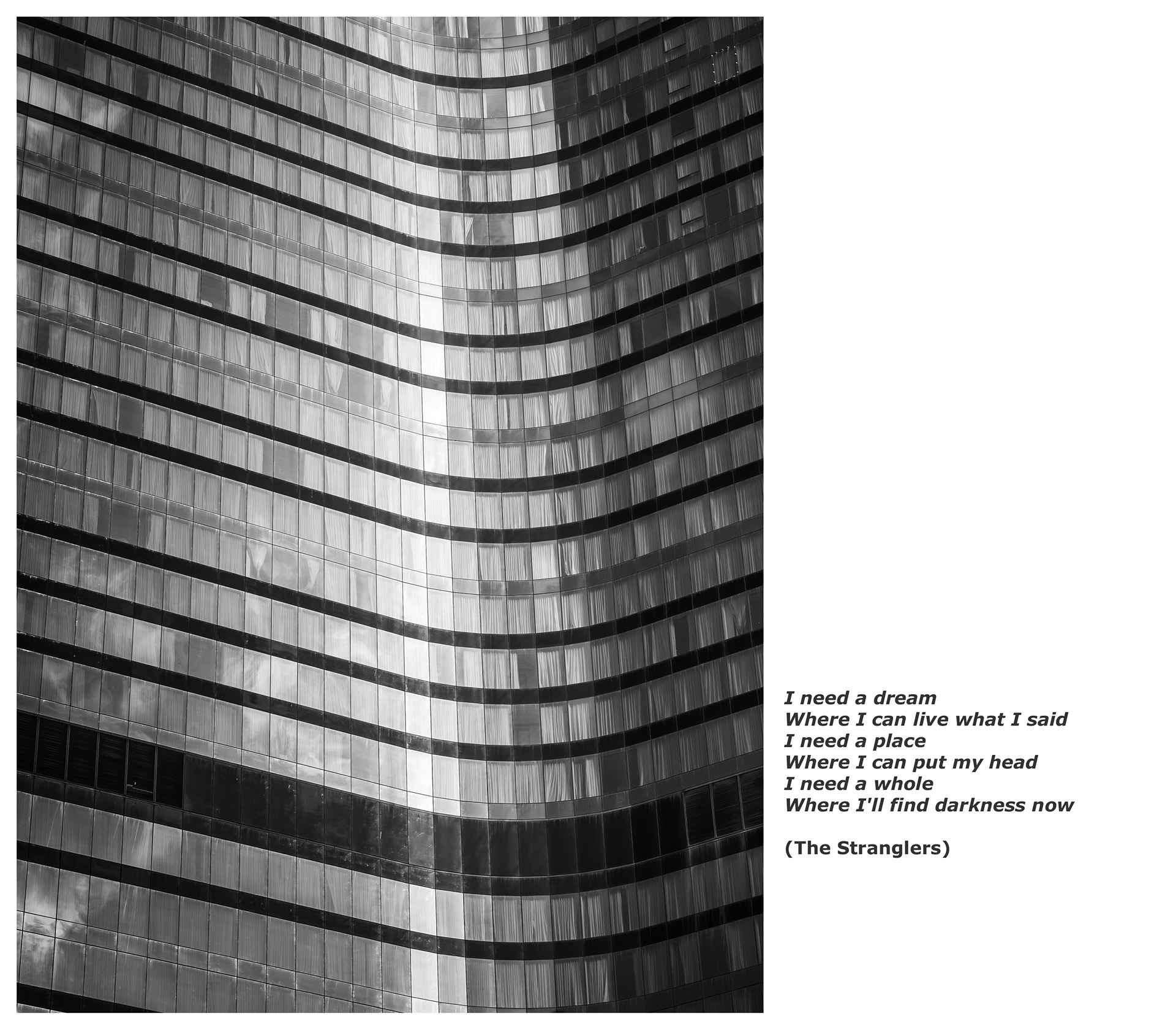
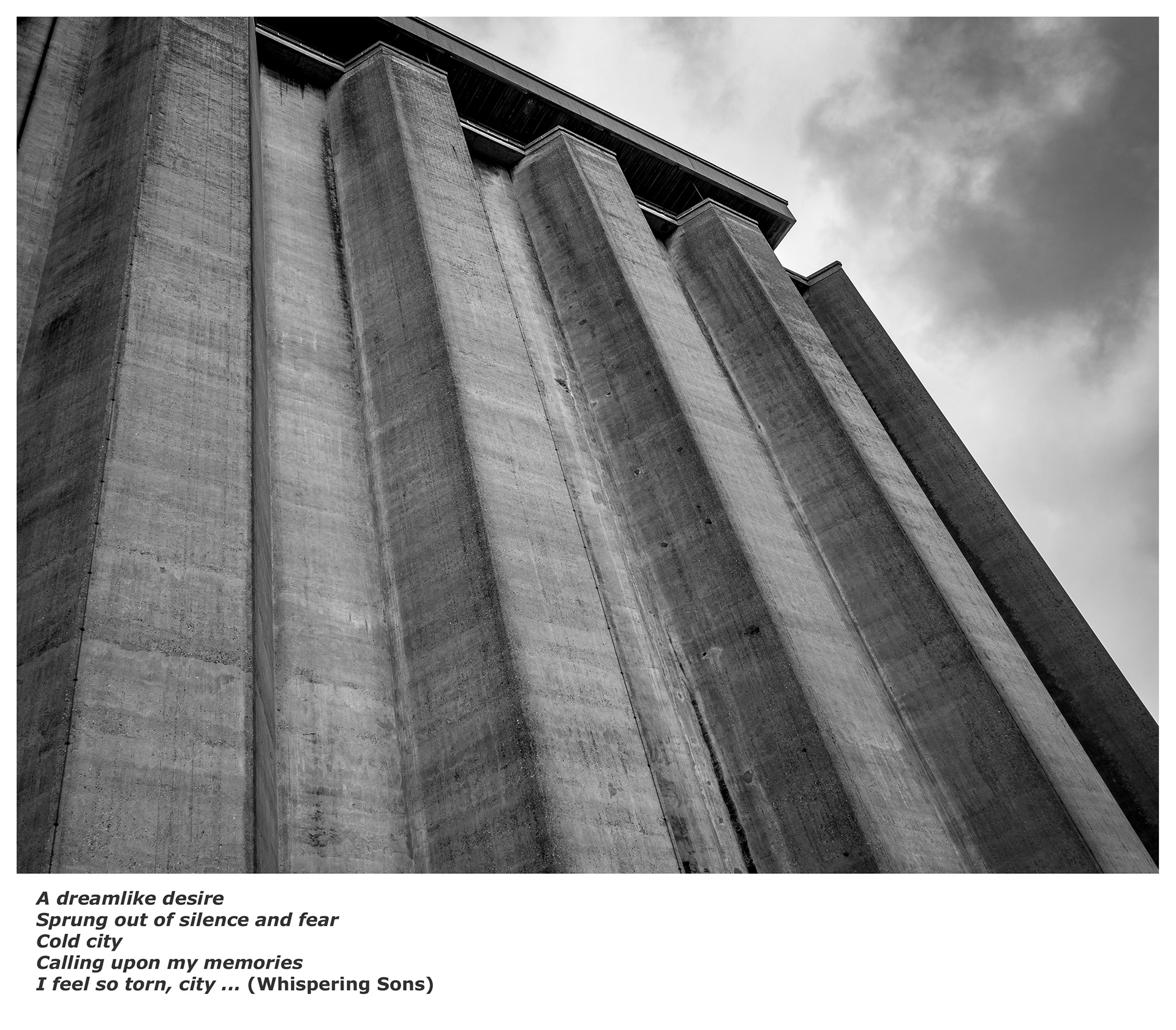
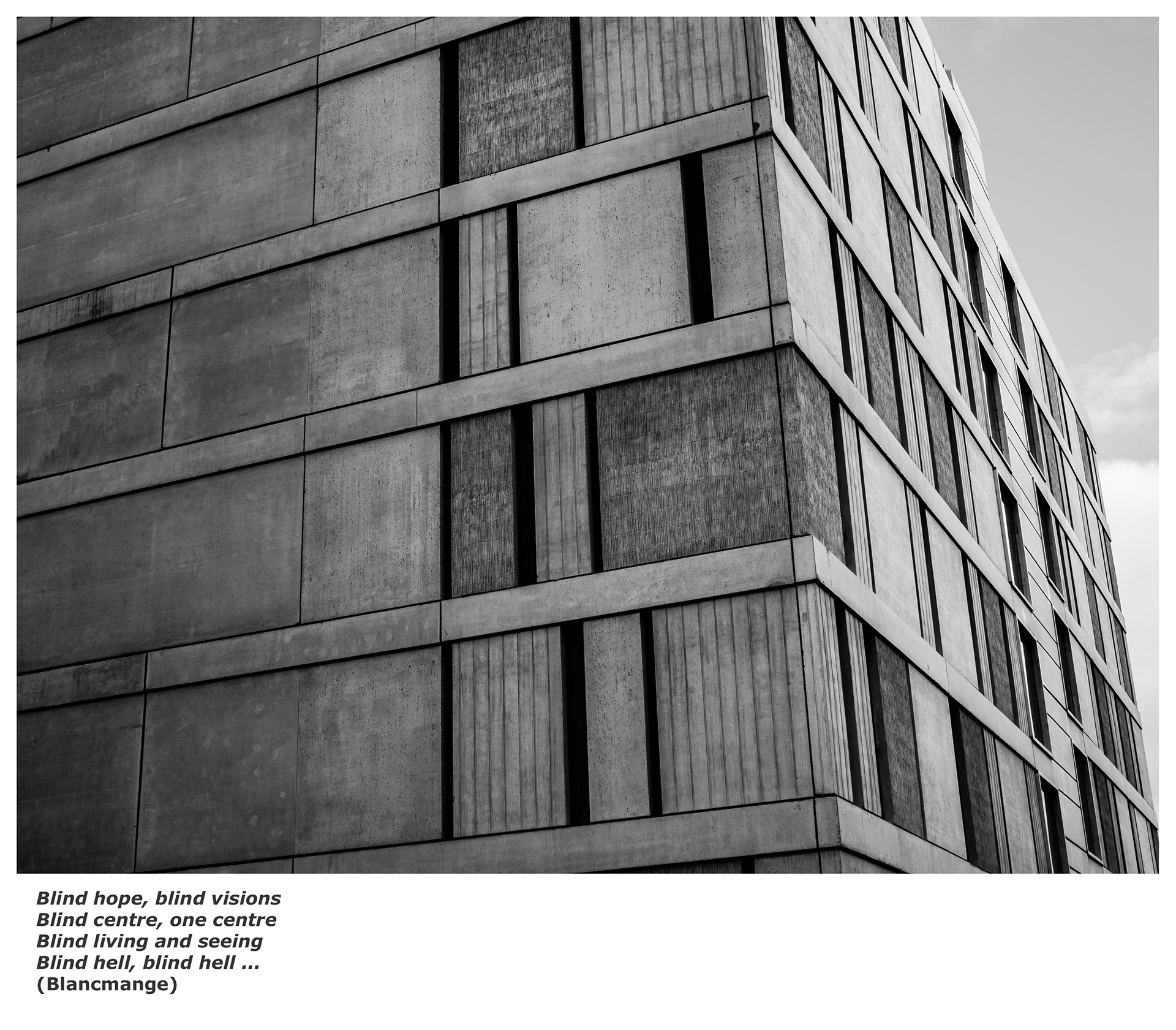
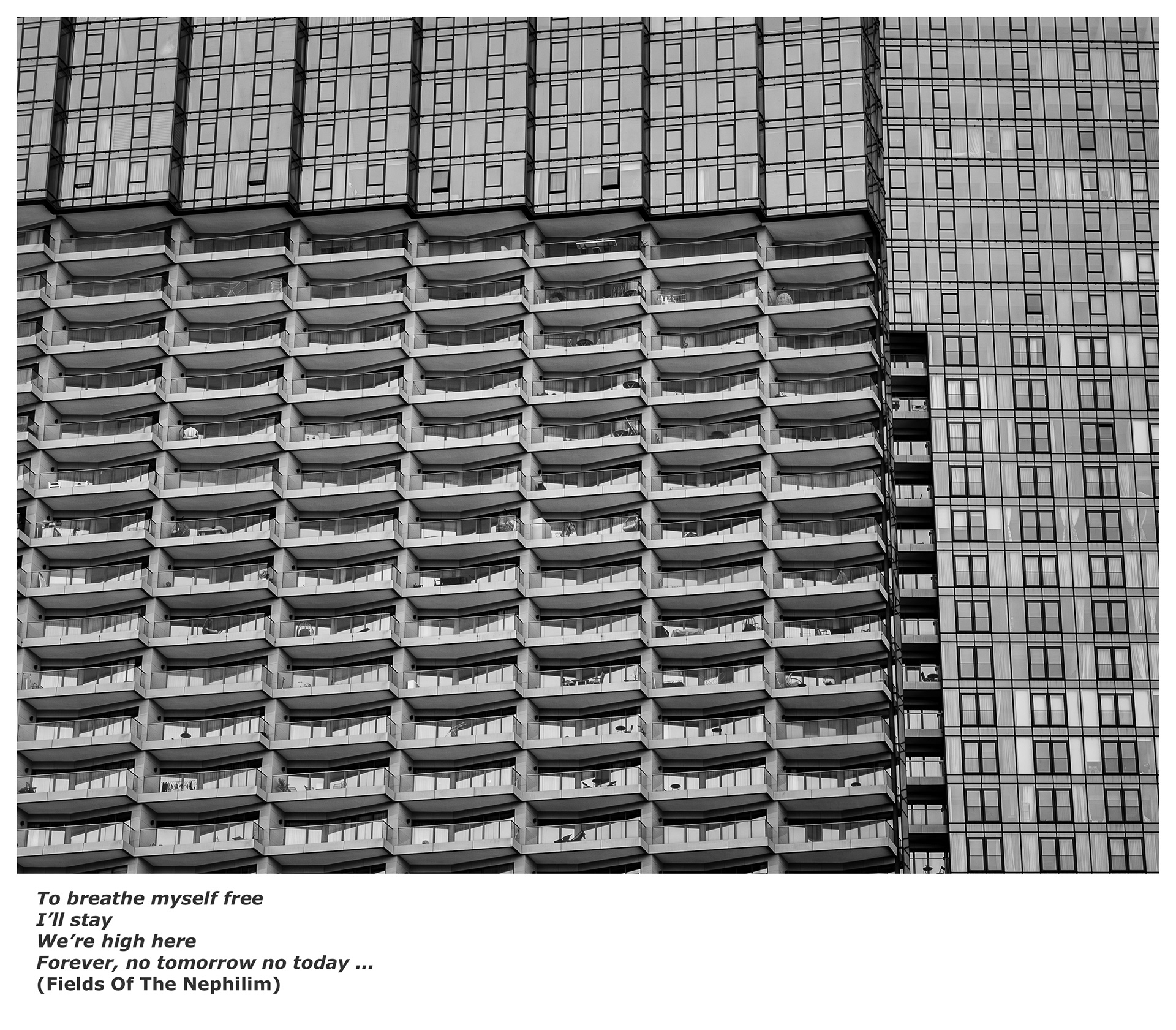
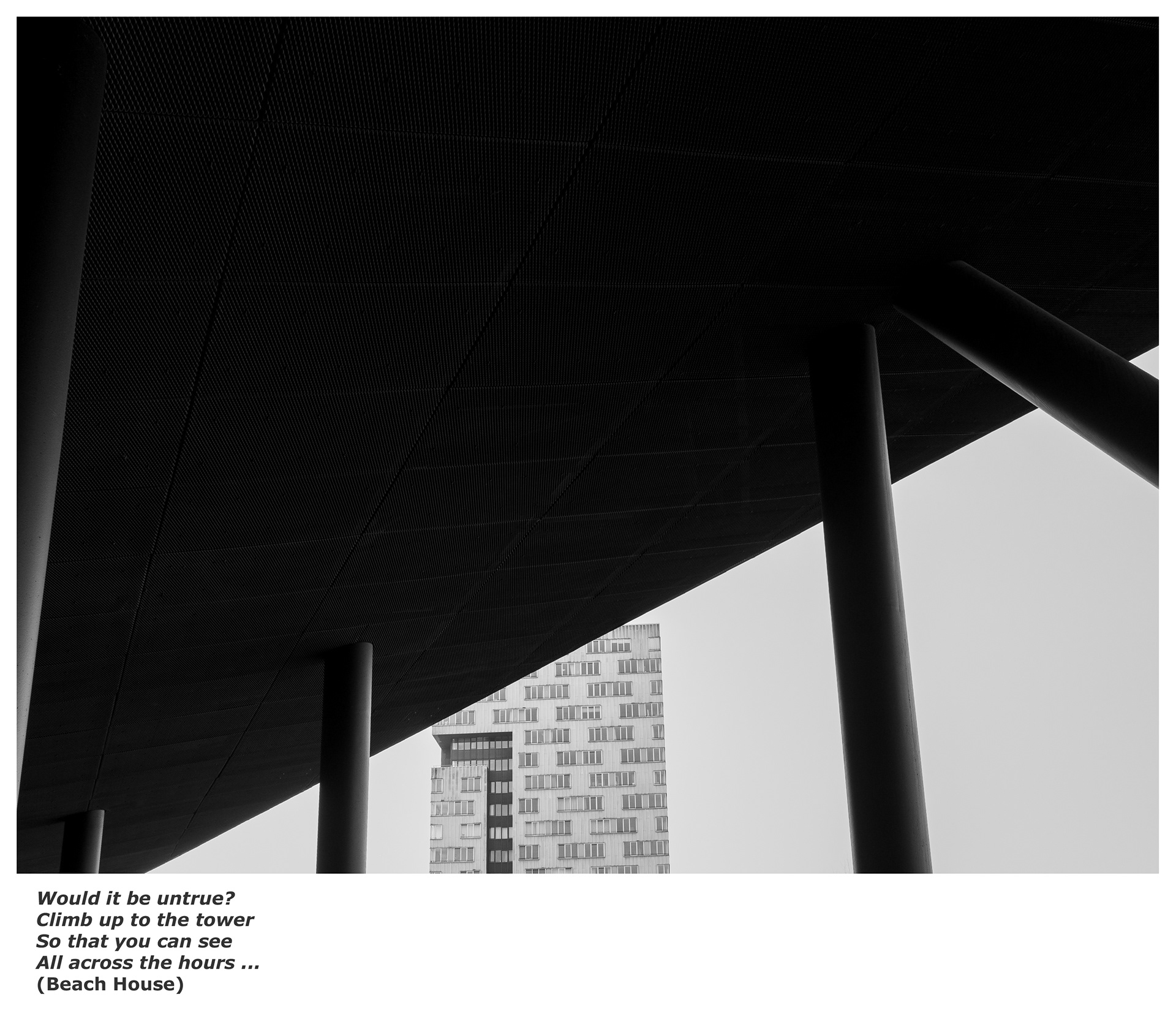
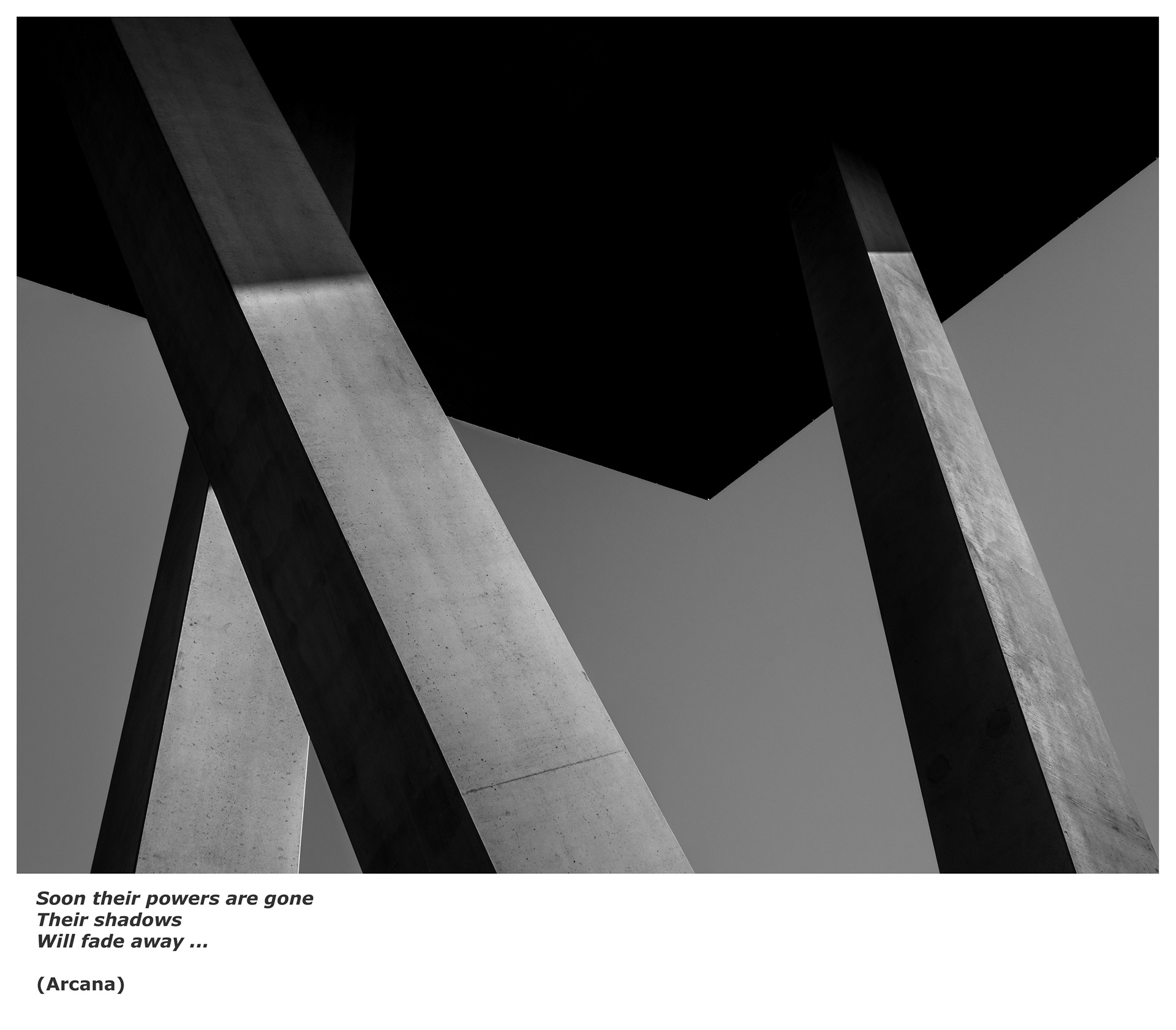
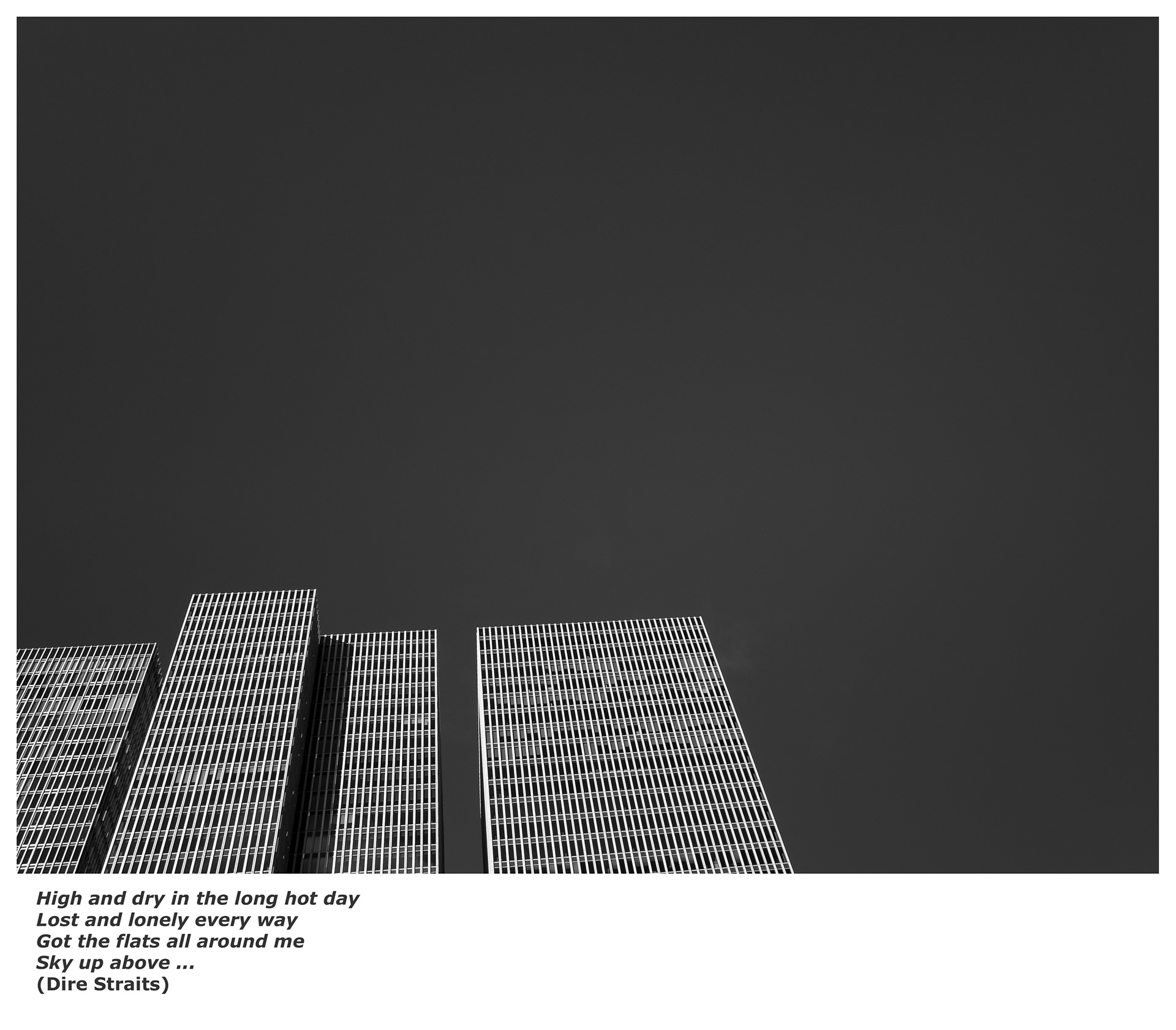
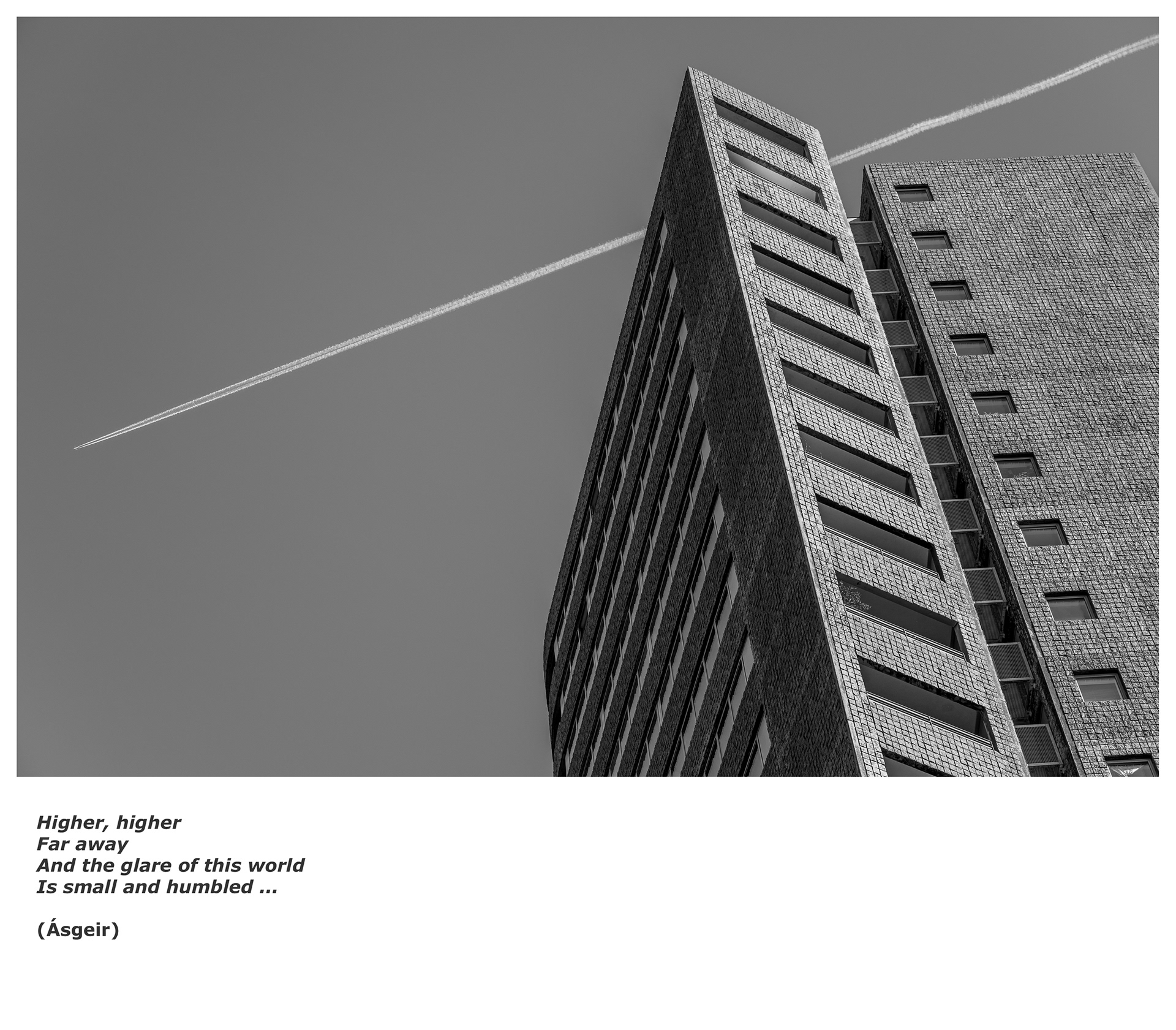
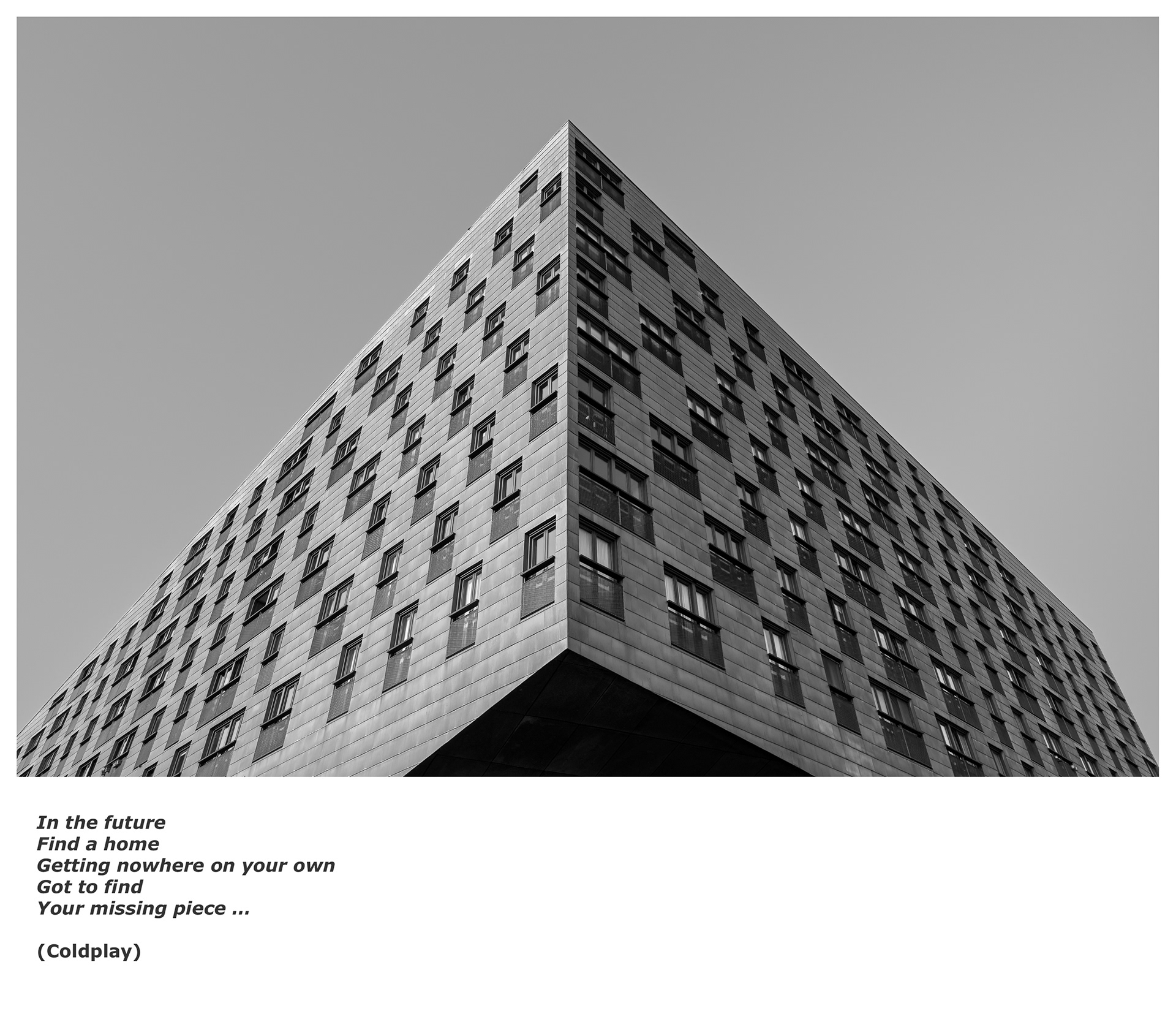
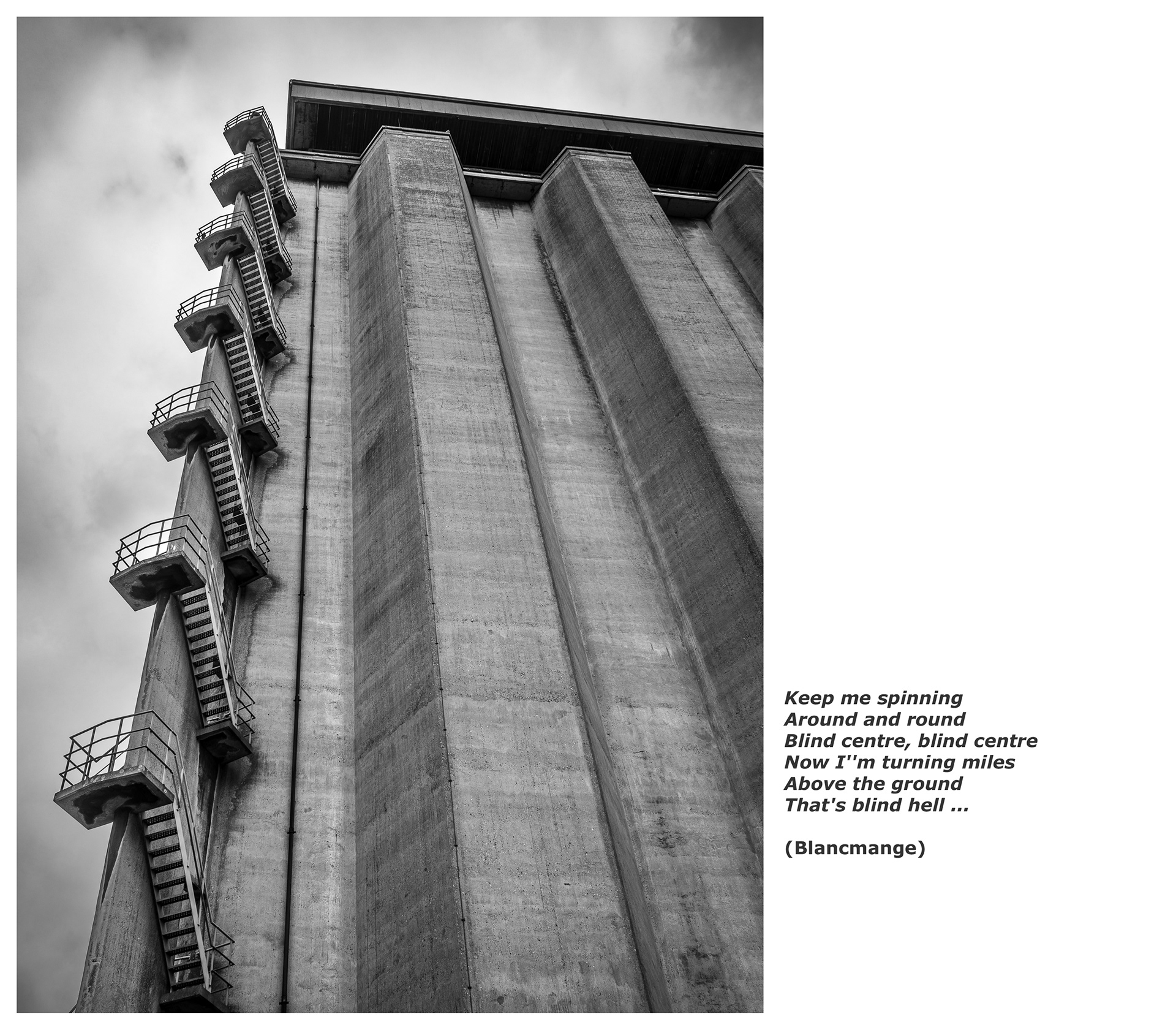
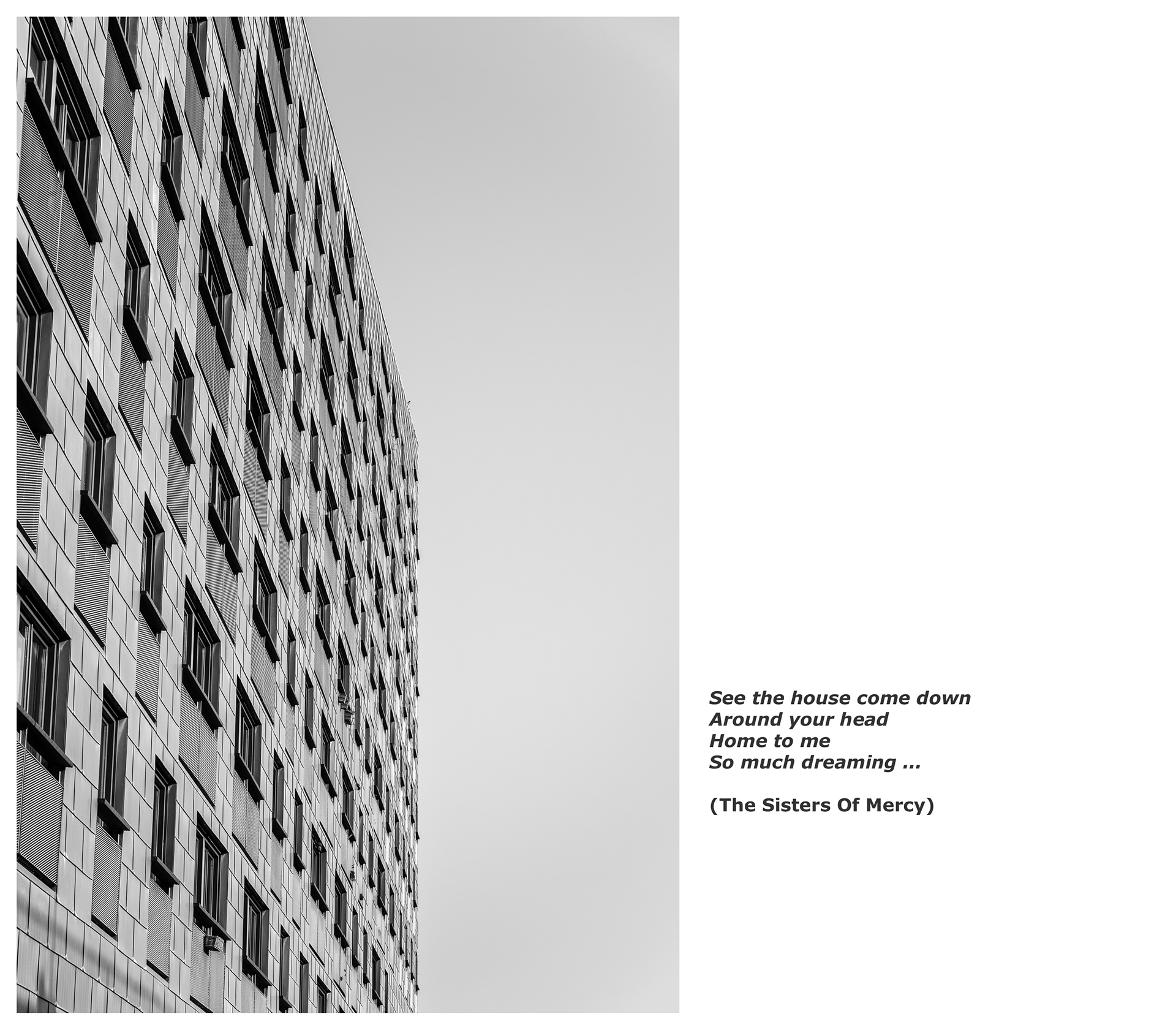
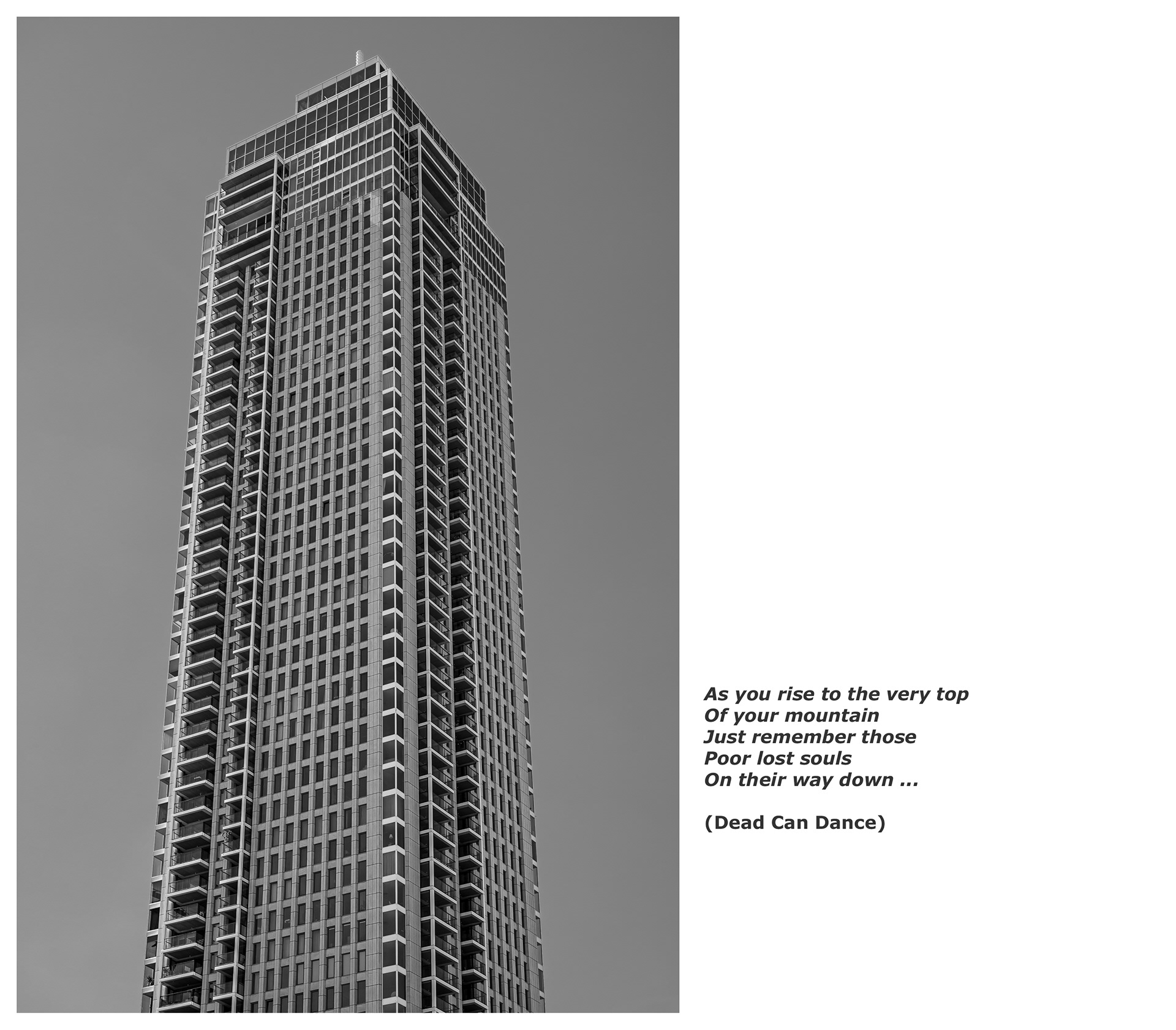
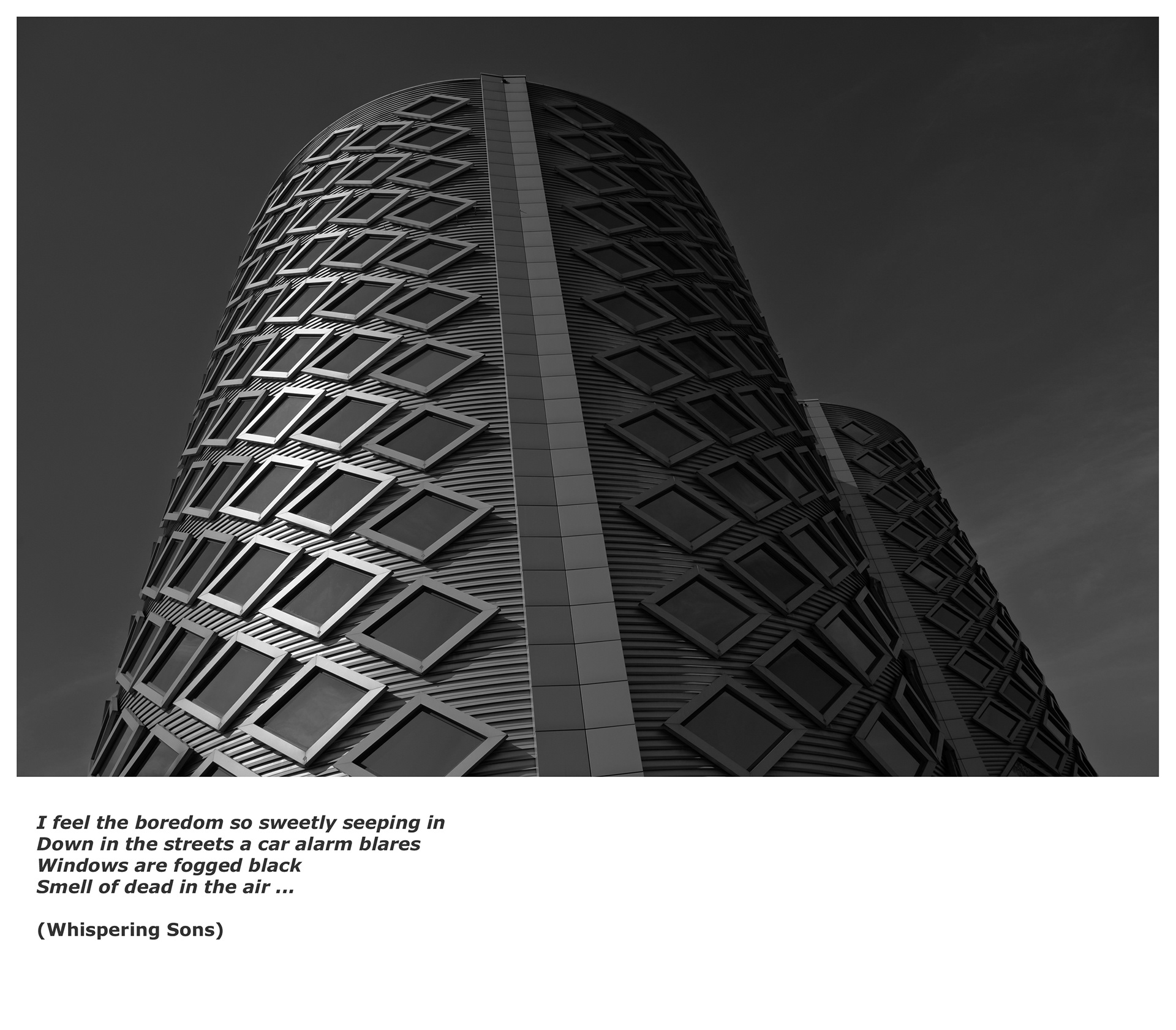
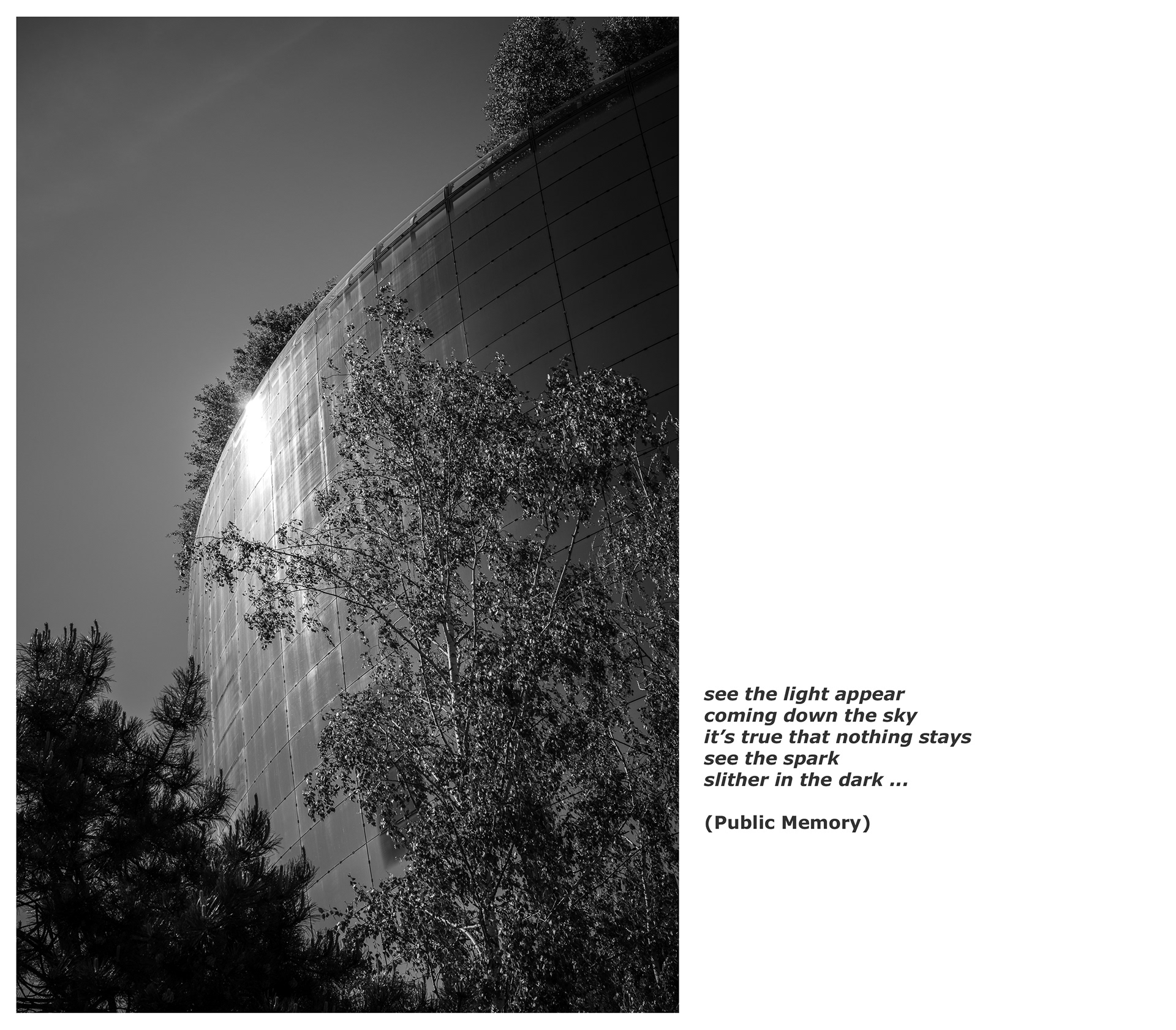

Leven in een architectonische dictatuur is leven in een wereld waar beton, staal en glas niet alleen de ruimte domineren, maar ook de regels dicteren. Gebouwen imponeren door hun schaal, ritme en precisie—strak, doordacht, schijnbaar elegant, maar altijd onverbiddelijk. In de monotone cadans van flats en kantoren verdwijnt individualiteit in een systeem dat eist en bepaalt. Deze serie raakt aan het Brutalisme—het rauwe beton, de harde lijnen, de geometrie zonder compromis. Tegelijkertijd reflecteert het ook de kille perfectie van moderne architectuur. De stad functioneert als een machine: monumentaal, onverschillig, autoritair. Toch schuilt er schoonheid in deze gewapende esthetiek—indrukwekkend, meedogenloos, maar hypnotiserend in zijn orde. “A Sleeper in Metropolis” legt vast hoe de stad ruimte claimt en confronteert met de vraag: Hoe manifesteert de mens zich in deze omgeving? • To live in an architectural dictatorship is to inhabit a world where concrete, steel, and glass not only dominate space but dictate the rules. Buildings impress with their scale, rhythm, and precision—sleek, deliberate, deceptively elegant, yet utterly relentless. In the monotonous cadence of flats and offices, individuality dissolves into a system that demands and dictates. This series engages with Brutalism—the raw concrete, the harsh lines, the uncompromising geometry. At the same time, it reflects the cold perfection of modern architecture. The city functions as a machine: monumental, indifferent, authoritarian. Yet there is beauty in this fortified aesthetic—imposing, merciless, yet hypnotic in its order. “A Sleeper in Metropolis” captures how the city claims space and confronts us with the question: How does humanity manifest itself in this environment?